

CEH Expectation vs Reality
The Certified Ethical Hacker (CEH) certification has long been one of the most recognised entry-to-mid-level cybersecurity certifications in the industry. For many aspiring professionals, CEH serves as a gateway into ethical hacking, penetration testing, security operations, and offensive security concepts.
Recently, I completed both the CEH Theory and CEH Practical examinations. This article is not intended as a review, a complaint, or an attack on the certification. Instead, it is a reflection on the differences I observed between expectations and reality throughout the preparation process and the examinations themselves.
The purpose of this write-up is to encourage discussion about how cybersecurity certifications can better align with modern industry requirements, practical skills, and real-world methodologies.
What I Expected From CEH
Before beginning my CEH journey, I expected a certification that would focus heavily on practical thinking, attack methodology, technical reasoning, and realistic security scenarios.
Cybersecurity is a field where technology changes rapidly. New attack techniques emerge constantly. Defensive technologies evolve. Infrastructure architectures become more complex. As a result, successful security professionals are not necessarily those who memorise the most commands or tool names. They are the individuals who understand underlying concepts and can adapt to changing environments.
Naturally, I expected the training materials, simulated examinations, theory examination, and practical examination to reinforce the same core philosophy.
My expectation was simple:
- Learn methodology.
- Understand concepts.
- Practice realistic scenarios.
- Demonstrate competence through assessment.
The reality turned out to be more complicated.
The Training Material Focus
One of the first observations I made during preparation was the strong emphasis on memorisation.
A significant portion of the learning material focuses on tools, commands, utilities, definitions, and terminology. While understanding common tools is certainly important, cybersecurity professionals rarely succeed because they remember hundreds of tool names.
In real-world environments, tools change constantly.
A penetration tester may switch between Nmap, RustScan, Masscan, custom scripts, or entirely different frameworks depending on the engagement.
An incident responder may use different forensic platforms depending on organisational requirements.
A malware analyst may develop custom tooling because no existing solution adequately solves a specific problem.
The common factor is not the tool itself.
The common factor is methodology.
Understanding why a tool is used is generally more valuable than remembering its name.
This distinction became increasingly apparent as I progressed through the certification process.
The Theory Examination Experience
One aspect of the CEH Theory examination surprised me.
While preparation materials and simulated examinations appeared heavily focused on textbook content and direct knowledge recall, the actual examination often required a greater degree of analytical thinking and scenario-based reasoning.
In many cases, questions were less about remembering definitions and more about applying knowledge to practical situations.
Interestingly, I consider this a positive aspect of the examination.
Cybersecurity professionals rarely encounter multiple-choice questions in their daily work. Instead, they encounter incomplete information, ambiguous situations, and decisions that require reasoning.
However, this creates an important challenge.
If the final examination is designed to test practical reasoning and analytical thinking, then the preparation materials should reflect those expectations more closely.
Candidates should be trained using the same style of thinking they will ultimately be evaluated on.
When study materials emphasise one approach, and the examination emphasises another, candidates can feel unprepared despite investing substantial time and effort into their studies.
The Practical Examination Challenge
The practical examination was where I experienced the most significant disconnect.
Within the first portion of the examination, I successfully solved multiple challenges and submitted valid flags. This confirmed that my access, methodology, and overall understanding of the examination environment were functioning correctly.
However, as the examination progressed, I encountered several situations where challenge descriptions appeared difficult to reconcile with the actual environment provided.
One example involved a challenge requiring the identification of a host running a misconfigured SMTP service within a specified network range.
Following standard enumeration methodology, I performed host discovery, service enumeration, targeted scanning, and additional verification procedures.
Despite extensive investigation, I was unable to identify an SMTP service matching the challenge description.
What made this particularly frustrating was not the difficulty of the challenge itself.
Difficult challenges are expected in any practical cybersecurity examination.
The challenge was determining whether I was missing a valid attack path or spending valuable examination time investigating an inconsistency between the challenge description and the environment.
These situations create a unique problem.
A practical examination should evaluate technical competence, problem-solving ability, methodology, and analytical thinking.
It should not require candidates to determine whether the challenge itself accurately reflects the environment they have been provided.
Reliable laboratory environments are essential because they allow candidates to focus entirely on solving problems rather than validating infrastructure.
Methodology Matters More Than Memorisation
Perhaps the biggest lesson from my CEH experience is the growing importance of methodology within cybersecurity education.
Technology changes.
Tools evolve.
Attack techniques adapt.
Methodology remains relevant.
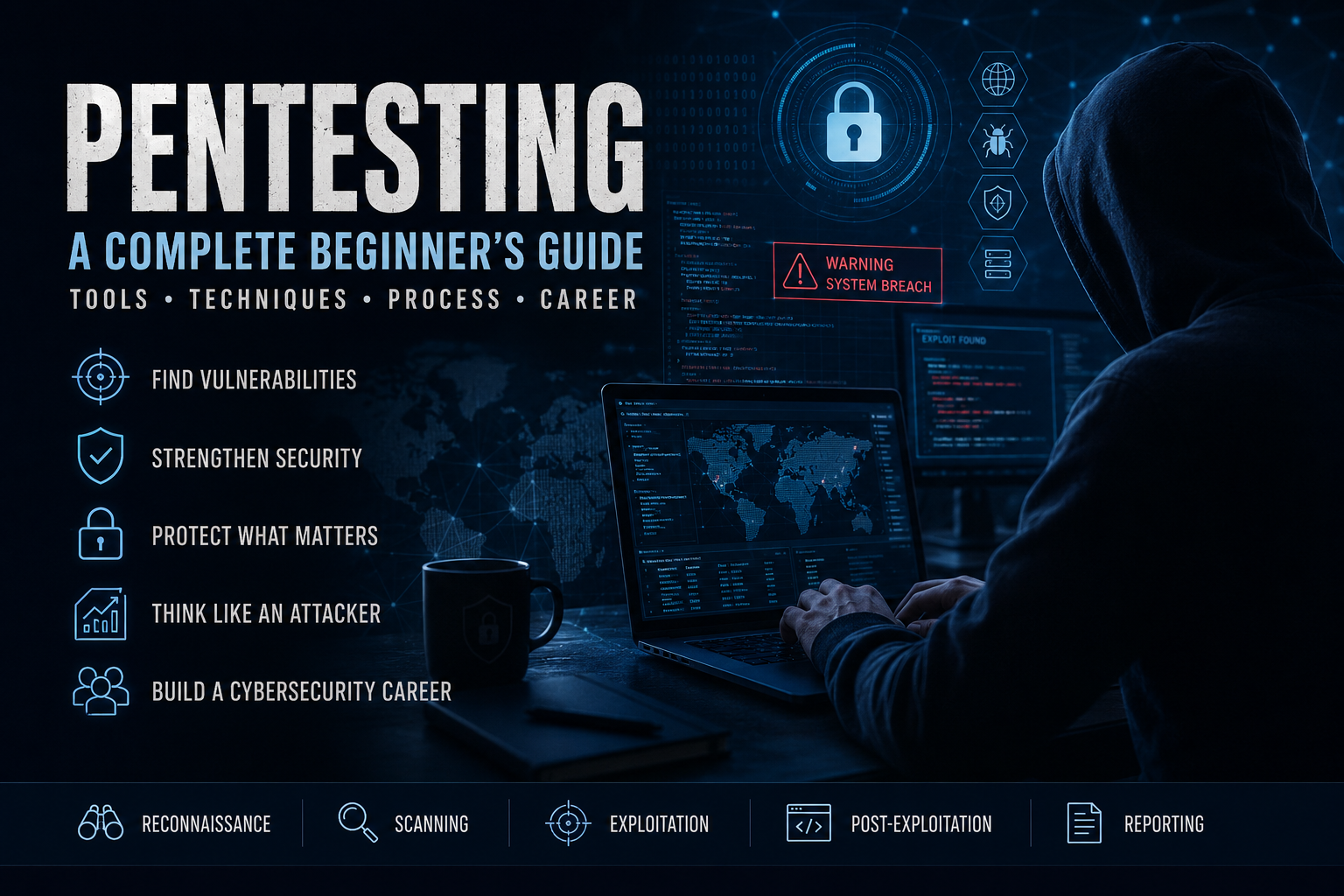
When experienced professionals approach a security problem, they generally follow a structured process:
- Reconnaissance
- Enumeration
- Analysis
- Validation
- Exploitation
- Documentation
The specific tools used during each phase may differ, but the thought process remains remarkably consistent.
This is why certifications should increasingly emphasise reasoning, investigation, and methodology over extensive memorisation.
A professional who understands methodology can learn a new tool in a matter of hours.
A professional who only memorises tools often struggles when those tools change or become unavailable.
The Missing Feedback Loop
Another observation relates to candidate feedback.
Most certification examinations provide a score and little additional context regarding mistakes or areas requiring improvement.
While protecting examination content is understandable, the absence of meaningful feedback creates a missed learning opportunity.
Education should not end when an examination is completed.
Candidates benefit from understanding which domains require additional study and where conceptual weaknesses exist.
Without feedback, many individuals leave the examination process with unanswered questions about their performance and future development.
What Modern Cybersecurity Certifications Should Measure
The cybersecurity industry of 2026 is very different from the industry of a decade ago.
Modern security professionals are expected to:
- Think critically
- Adapt quickly
- Investigate effectively
- Communicate clearly
- Understand methodology
- Apply concepts in unfamiliar situations
These skills cannot be measured solely through memorisation.
Certifications remain valuable because they provide structured learning paths and standardised assessments. However, their long-term relevance depends on how accurately they reflect the realities of modern cybersecurity work.
The strongest certifications are those that reward understanding rather than repetition.
Final Thoughts
My CEH experience highlighted both strengths and areas for improvement.
The examination itself demonstrated a greater emphasis on practical reasoning than I initially expected, which is encouraging. At the same time, I observed gaps between training materials, simulated assessments, and the actual examination experience.
Most importantly, the experience reinforced a belief I have held throughout my cybersecurity journey:
Tools are temporary.
Methodology is permanent.
The future of cybersecurity education should focus less on what professionals can memorise and more on how effectively they can think, adapt, investigate, and solve problems.
That is ultimately what the industry demands, and what certifications should strive to measure.
Author’s Note
This article represents my personal observations and opinions based on my own CEH Theory and Practical examination experience. It is not intended to attack, defame, ridicule, or diminish any individual, organisation, certification holder, instructor, or training provider.
The purpose of this write-up is to contribute to a constructive discussion regarding cybersecurity education, certification design, practical assessment quality, and industry expectations. Reasonable people may disagree with some or all of the viewpoints expressed here, and that is perfectly acceptable.
If any factual inaccuracies are identified, or if any organisation or individual believes a statement made in this article is incorrect, misleading, or lacks sufficient context, I welcome professional communication and evidence-based discussion.
Should a valid concern be raised regarding factual accuracy, I will review the matter in good faith and make corrections, clarifications, or updates where appropriate.
For correspondence regarding this article, please contact:
Biswadeb Mukherjee
Email: [email protected]
Constructive dialogue is always more valuable than assumptions, and the objective of this article is discussion, not confrontation.
Note: This article is primarily based on the author’s personal experience with the CEH Theory and Practical examinations. External references are provided for context regarding the certification, ethical hacking methodologies, and industry assessment frameworks.
References
- EC-Council. Certified Ethical Hacker (CEH) Certification Overview
https://www.eccouncil.org/train-certify/certified-ethical-hacker-ceh/ - EC-Council. Learn Ethical Hacking Online | Certified Ethical Hacker (CEH)
https://www.eccouncil.org/train-certify/ethical-hacking/ - EC-Council. C|EH Candidate Handbook
https://www.eccouncil.org/wp-content/uploads/2023/02/CEH-Handbook-v4.0.pdf - MITRE Corporation. MITRE ATT&CK Framework
https://attack.mitre.org/ - National Institute of Standards and Technology (NIST). Technical Guide to Information Security Testing and Assessment (SP 800-115)
https://csrc.nist.gov/publications/detail/sp/800-115/final






Leave a Reply